




Dental Clinic Turkey

GET A FREE QUOTE

https://dental.dentarma.com/taxonomy/term/2384
CAPTCHA
This question is for testing whether or not you are a human visitor and to prevent automated spam submissions.

FREE CONSULTATION REQUEST

https://dental.dentarma.com/taxonomy/term/2384
CAPTCHA
This question is for testing whether or not you are a human visitor and to prevent automated spam submissions.

Patients Reviews

  • Google 228 Reviews - 4.7
  • Trustpilot 342 Excellent - 4.9
  • Patrick Ferrara-Forbes
    If you want a set of new teeth, But you can't be doing with the drama, Come visit us in Turkey, We are, of course, Dentrama. I wrote this whilst in the hotel, which was included in the package price. From the moment of first contact on WhatsApp, I was initially attracted by the price.... +More
  • Charlie Yust
    First thing stands out about Prof. Emre Şeker besides his skills is his personality, what a sweet gentleman! I live in United States and go to dentist often and when I encounter him with the dentists in US, couldn’t even come up with an answer. The equipment he uses I’ve never seen before, very... +More
  • Anthony Jones
    People... If your thinking about getting your teeth done, then look no further. I was really nervous, an worried. Have I mad the right choice? Am I going to be scammed? But wow. Dental work was superb, not like the butchers in UK. The building and dental tech was 5. They made me feel so much at... +More
  • Fikret Turan
    For those seeking more than just dental care but an experience of sheer excellence, Dentarma Clinic is the answer. Başak Şeker and Emre Şeker didn't just perform my implant treatment; they orchestrated a symphony of precision and expertise. The result? An implant that feels like it's... +More
  • Roy Fowke
    Originally came for my mother to get implants done and the staff was amazing with transfers to the clinic and hotel if there was a problem they was quick to fix it I would definitely recommend coming to this clinic 10/10 in my opinion!
  • Alan Mitchell
    Wow!! Dr Emre and his team are fantastic! They put me at ease from day one, explained everything in detail. So professional and efficient. I highly recommend them to all my friends and family
  • Sandy Colins
    I live in Massachusetts USA and my insurance didn't cover dental plans as I had to pay five figures to get a Zirconium Veneer. Going to Turkiye was a far more cheaper alternative than going to a provider near by. Prof. Dr. Emre Seker at Dentarma was recommended by my cousins as they figured... +More
  • Constantin Marin
    Very satisfied with all procedures at Dentarma. Very good team starting wit Prof. Dr. Emre to assistance and personalised driver. All team very professional and attended all my needs making the whole process flawless.
  • Berna Tamer
    Professor Seker crafted a stunning new smile for me, showcasing remarkable talent. The pricing, in comparison to the USA and Europe, is exceptionally reasonable.
  • Michael Potter
    With such an abundance of dentists across the various cities of Turkey, What are the chances of finding one that Will deliver all your expectations. Please read my honest review, i feel utterley compelled to write. Jointly to promote Dentarma for their professional and personal experience they... +More

Zirconia Crown

Dental crowns are used to cover a tooth or a dental implant. Dentists commonly utilize crowns to support broken, weak, or misshapen teeth. Additionally, dental crowns can be used to cover teeth that are severely worn or discolored. They may also be employed with bridges to strengthen multiple teeth.

When it comes to the materials used for crowns, there are several options, including ceramic and metal. Another option is zirconium coating. Although zirconium crowns are classified as a type of ceramic crown, they are crafted from zirconium dioxide, an extremely durable metal related to titanium.

What is a Dental Crown?

Dental crowns are restorations used to restore the shape, size, and appearance of a tooth. When fillings fail to solve the problem, crowns placed on damaged teeth provide protection. Crowns can be made from materials such as metal, porcelain, resin, and ceramic, requiring no special care beyond regular and adequate oral hygiene.

Crowns are typically produced in a tooth-colored shade to match natural teeth. When determining the material for the dental crown, individual factors such as the tooth's location and function, the position of the gum tissue, the amount of teeth visible when smiling, and the color of the surrounding teeth are evaluated.


Over time, teeth can become misshapen or damaged due to decay, injury, or usage. A dental crown is placed over the tooth to cover its visible part. Crowns, which protect teeth from fractures, are an effective method for restoring lost aesthetic appearance and function.

What are the Types of Dental Crowns?

There are different types of dental crowns, including gold, porcelain, porcelain-fused-to-metal (PFM), zirconium, and E-Max (Lithium Disilicate).

Gold Crowns: Gold dental crowns, which are combinations of other metals such as copper, nickel, or chromium, are highly durable and strong. However, they are rarely preferred today due to aesthetic reasons.

Porcelain Crowns: This is the most commonly used type of crown today. Made entirely of porcelain, these crowns provide the best and most natural appearance. They match surrounding teeth in shape, size, and color. Porcelain crowns are biocompatible and are considered the best option for anterior tooth restorations. They are non-toxic as they do not contain metal. However, for porcelain crowns to last a long time, proper maintenance is essential.

Digital Smile Makeover

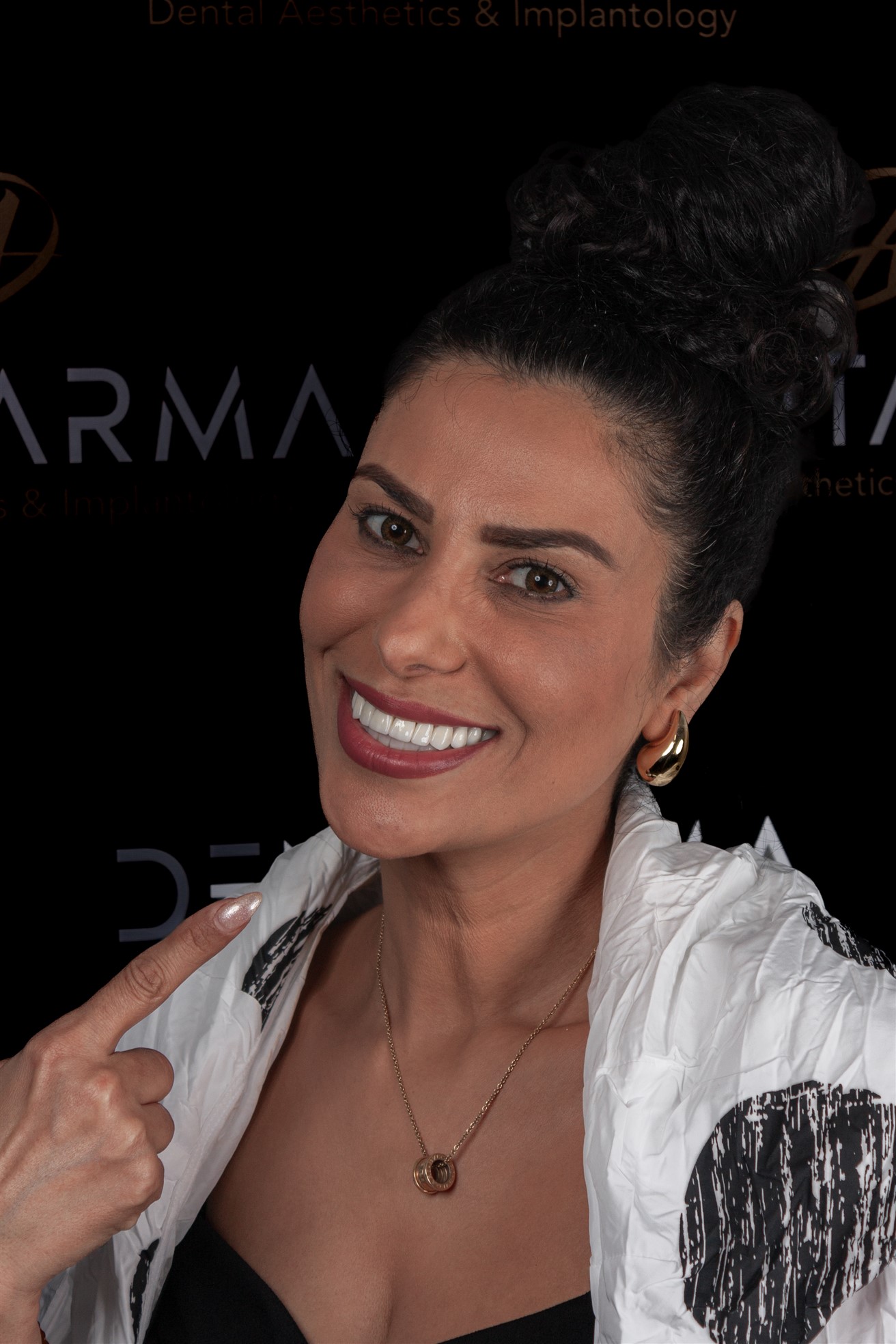
Many people feel the need to hide their smiles or mouths while laughing or speaking because they are not satisfied with their smiles, the color or shape of their teeth, leading to a sense of discomfort and the need to conceal their mouths while smiling or speaking. It can be said with certainty that those who are not satisfied with their smiles or the color and shape of their teeth and feel the need to hide their mouths while smiling or speaking require smile design. Through smile design, it is possible to address and resolve issues that cause discomfort in individuals, while also achieving an aesthetically pleasing and healthy smile.

One of the most important features of smile design, which is a personalized treatment, is that it allows the patient to see how their smile can change as a result of treatment before it begins. Although beauty perception varies among individuals and cultures, there are clear rules underlying it. The most important aspect of a beautiful smile is the teeth, which must be in harmony with the person's facial shape and lip structure to achieve an aesthetic smile.

Digital smile design, which can be applied to anyone who wants a more beautiful and pleasant smile, can reveal the most suitable and natural-looking smile for the person's face and character. When performing smile design, important considerations include the length of the person's teeth, lip structure, gum characteristics, and harmony between lips and teeth. For a beautiful smile, there should be no misalignment in the teeth, the gum and tooth surfaces should appear clean, and the teeth should be complete, white, and free of stains.

Holywood Smile Costs in Antalya Turkey

What is Aesthetic Smile Design in Turkey?

Digital Smile Design refers to the aesthetic smile design created by dentists using digital technologies. It involves the analysis of the patient's teeth and facial proportions through the use of digital design software.

Dentists aim to achieve a natural and beautiful smile by ensuring harmony between the patient's gums, lips, teeth, and face using advanced digital programs. Since each person's smile is unique, a patient-centered approach is adopted, and the design is tailored to the individual. Once the design is shared with the patient and approval is obtained, the digital smile design treatment begins.

Emax Veneers

  • What is Emax Veneer?

  • What is Emax tooth veneer?

Emax is a dental veneer technique that helps meet aesthetic and functional needs in dentistry. Emax veneers are made from high-strength lithium disilicate ceramic material and are used to enhance the appearance and functional characteristics of teeth.

Emax can be used to conceal scratches, stains, and deformities in the appearance of teeth. At the same time, when applied to the outer surface of teeth, it restores the natural color and shape of teeth. While correcting the appearance of teeth, Emax also improves their functional properties.

Emax veneers are a widely used technique in dentistry and its application is quite simple. The dentist evaluates the structure and condition of the tooth, and the tooth is prepared initially. Subsequently, the ceramic veneer is modeled to fit the tooth and made permanent. Emax is a veneer technique that offers high performance in dentistry and is an ideal option for improving the aesthetic and functional properties of teeth.

While enhancing the appearance and functional characteristics of teeth, Emax also ensures their durability and longevity. Emax veneers help protect teeth from harmful substances, decay, and gum diseases.

What are the types of Emax?

Emax is a dental veneer technique made from lithium disilicate ceramic material and can come in many different types. The following Emax types are among the commonly used:

Dental Implants Treatment Turkey

What is a dental implant?


A dental implant is a treatment used to replace missing teeth. This treatment involves placing a titanium screw, which is accepted by the body, into the jawbone, providing the foundation support for a dental prosthesis called a tooth prosthesis. Implant therapy is used to fill the gap caused by tooth loss and also to ensure the strong and secure preservation of the dentition.

The most significant advantage of implant therapy is restoring the natural appearance and function of the dentition. Additionally, it prevents issues such as the frequent replacement of dental prostheses, which may weaken the dentition over time. Implants can be used in activities such as eating and speaking, similar to natural teeth, and they have a long lifespan.

Implant therapy is performed as a surgical procedure by a dentist. The success of the treatment depends on factors such as the amount and quality of bone where the implant is placed, the patient's dental and gum health, and the proper structuring of the implant. Implant therapy may consist of several stages and may take several months. However, as a result, the patient achieves a strong and natural-looking dentition.

Types of Dental Implants

Dental implants can be categorized into different types based on the materials of the screws and dental prostheses. These include:

Titanium implants:

The most commonly used material, well-accepted by the body.

  • Zirconium implants: Provide a white color similar to natural dentition and offer greater durability and aesthetic advantages.
  • Ceramic implants: Are white-colored and well-accepted by the body, providing a natural appearance similar to natural dentition.
  • Endosseous implants: Placed directly onto the bone to fill the void and support the dental prosthesis.
  • Subperiosteal implants: Placed under the bone and positioned onto the dental prosthesis.

Each type of implant has its own advantages and disadvantages, and the selection of the most suitable one depends on the patient's needs and the evaluation conducted by the dentist.

Dental Implant Treatment

Dental implant therapy is a surgical treatment performed to address tooth loss. The implant, designed as a titanium screw, is inserted into the body and provides the basic support for a dental prosthesis called a tooth prosthesis. The aim of the treatment is to fill the gap caused by tooth loss and ensure the strong and secure preservation of the dentition.

All on 4 Implants

All-on-4 treatment, which has become quite popular in modern dentistry, offers many advantages for patients as an implant treatment method. This treatment option is faster, more economical, and more effective compared to traditional implant treatments, especially for patients who are completely edentulous or at risk of becoming completely edentulous in the near future.

In recent years, oral and dental health has become one of the determining factors in individuals' quality of life, significantly influencing dental prosthetic planning by dentists. Practices that enhance patient satisfaction have garnered more attention.

Implantation is one of the methods developed to replace lost teeth due to chewing, taste perception, speech, pain, and aesthetics. However, implant treatment tends to be more prolonged and costly for patients who are completely edentulous or at risk of becoming completely edentulous in the near future. All-on-4 treatment is a rapid and effective treatment method aimed at eliminating the need for advanced surgery due to sinus lift, bone addition, and insufficient bone in patients who are completely edentulous.

The All-on-4 treatment concept involves the fixed full-jaw prosthetic restoration on 4-6 implants placed in the same surgical operation. Considering function, aesthetics, taste, speech, and confidence, it ensures patient satisfaction.

How is the All-On-4 treatment performed?

The All-on-4 treatment utilizes the titanium screw mechanism used in traditional implants. The most significant difference between traditional implants and All-on-4 implants lies in how they are positioned within the mouth. While 8 or 10 implants are typically used to replace missing teeth in a completely edentulous jaw, this new technique requires only 4 implants.

In the anterior region, 2 implants are placed where the bone is thickest, while in the posterior part of the jaw, 2 implants are placed. The implants in the front are positioned at a 90-degree angle, while those in the back are placed at a 45-degree angle to maximize strength. After these 4 implants are placed, bridges or crowns are fitted onto them.

Temporary prostheses are prepared based on measurements taken from patients before the All-on-4 treatment. If there are any teeth to be extracted, they are removed under local anesthesia, and the implants are placed. Temporary prostheses prepared based on measurements are then attached to these implants. After 3 months, the patient's permanent prostheses are fitted.

All on 6 Implants

The All-on-6 implant technique is based on placing 6 implants in the upper jaw and 6 implants in the lower jaw. With this implant technique, a permanent fixed prosthesis can be applied to the lower jaw in a minimum of 5 weeks and to the upper jaw in a minimum of 12 weeks. This method, which allows the fixation of the dental prosthesis on the same day, is an advanced technology technique. It is suitable for patients with bone loss, especially in the posterior dental regions, to use fixed teeth.


All-on-6 implants are a dental procedure used to reconstruct an individual's mouth when one or both jaws have lost a significant number of teeth. This procedure offers the option to replace all teeth with six natural-looking and feeling dental implants. All-on-6 implants typically do not require bone grafting, making them an excellent solution for patients with low bone density or volume in their jaws. However, if you smoke or have diabetes, this procedure may not be suitable for you. Treatment is recommended for patients with complete tooth loss or planning to replace remaining teeth with implants. All-on-6 treatment provides a long-term and stable alternative to traditional prosthetics.

How Is the Procedure of All-On-6 Implants Performed?

The All-on-six implant procedure is based on applying four or six dental implants to completely edentulous patients. They are placed on the same day at specific angles, followed by the fixation of dental prostheses. Unless requested by patients or deemed necessary by the dentists, there is no movement in fixed teeth. It is a treatment method applied to patients who cannot use prostheses due to excessive bone loss. Using the implants on the same day is possible. Before treatment planning, X-ray bone examinations are performed to avoid any potential problems during the process. Advanced technology systems are used during this process. Treatment is planned considering bone thickness and height.

Who Can Receive All-On-6 Implant Technique?

Patients who can receive all-on-6 implants are those without any obstacles to undergoing dental implant surgery. Therefore, this technique can be applied to patients without systemic diseases and with sufficient bone volume. The following conditions necessitate this treatment:

Patients with a fully edentulous jaw who have sufficient bone quantity and density in the premolar area for implantation can undergo this procedure.

Teeth Bleaching

For anyone aiming to achieve an aesthetic smile, one of the most crucial aspects is the color of their teeth. Bright, sparkling white teeth emphasize not only a healthy smile but also self-confidence.

Teeth have a natural color determined by genetic factors. Just as individuals have varying skin tones, tooth color also varies from person to person. This color cannot be changed by brushing alone.

We can categorize discolorations that occur later in teeth into internal and external discolorations.

External discolorations occur when pigmented substances such as those found in cigarettes, tea, and coffee accumulate on the tooth enamel. Some of these stains can be removed through dental cleaning and polishing procedures.

Internal discolorations, on the other hand, occur within the dentin layer of the tooth.

Anatomical Structure of Teeth

The structure of a tooth comprises four layers. From outermost to innermost, these are enamel, dentin, pulp, and cementum. These layers exhibit different organic and inorganic structural characteristics.

The outermost layer, enamel, is shiny, transparent, and hard. It is the hardest tissue in the body, primarily composed of calcium. Enamel protects the tooth surface. Throughout the day, our teeth are exposed to external factors such as food, acidic and sugary drinks. Enamel acts as a protective shield against these factors. Over time and with use, enamel can become damaged. Trauma, teeth grinding, aggressive brushing, and the use of improper brushing products can lead to abrasions or cracks in the enamel, resulting in discolorations on the tooth surface.

What is Dentin?

Dentin is the layer beneath the enamel. It is softer in structure compared to enamel and provides the color of the teeth. Dentin contains dentinal tubules and dentinal fluid within these tubules. When using whitening agents, our goal is to reach this dentin layer and lighten its color. Since enamel is transparent in nature, it reflects the color of the dentin layer. In individuals with higher age scales, enamel thinning leads to more visible tooth discolorations.

So, What is Pulp?

Pulp, also known as dental pulp, is the central portion of the tooth rich in blood vessels and nerves. It is the nourishing layer of the tooth. In the presence of decay, it can cause pain and sensitivity.

The cementum layer covers the surface of the root and provides the connection between the tooth and the bone.

Pages

Dental Clinic Turkey in Antalya / Turkey

.

https://api.whatsapp.com/send/?phone=%2B905336697044&text&type=phone_number&app_absent=0

Free Consultation Request

https://dental.dentarma.com/taxonomy/term/2384